
Table Saw Stock Guide: A Comprehensive Overview (12/10/2025)
Table saws are essential for woodworking‚ yet require precise stock positioning; fences are crucial for accurate cuts‚ with types like T-square and Biesemeyer dominating the market.
Table saws represent the cornerstone of many workshops‚ functioning as versatile tools for a wide array of woodworking tasks. However‚ their inherent capability is limited to spinning a blade; accurately positioning the workpiece – the “stock” – is paramount. This is where the table saw fence becomes indispensable.
Without a reliable fence‚ achieving straight‚ consistent cuts is exceedingly difficult. Understanding the interplay between the saw‚ the stock‚ and the fence is fundamental to successful woodworking. A quality table saw‚ paired with appropriate stock handling techniques‚ unlocks a world of creative possibilities for both DIY enthusiasts and seasoned professionals.
The Importance of a Quality Fence
A quality fence is arguably the most critical component‚ beyond the saw itself‚ for achieving precise and repeatable cuts. It directly dictates the accuracy of rip cuts‚ ensuring stock remains parallel to the blade. Cheap or poorly maintained fences introduce drift and wobble‚ compromising cut quality and potentially creating safety hazards.
Investing in a robust fence translates to improved project outcomes‚ reduced material waste‚ and enhanced user confidence. A precise fence allows woodworkers to consistently produce professional-grade results‚ making it an invaluable asset in any workshop setting.
Types of Table Saw Fences
Table saw fences broadly fall into three main categories‚ each offering distinct advantages. T-square style fences are known for simplicity and affordability‚ while Biesemeyer style fences represent a premium option‚ lauded for their precision and locking mechanisms. Finally‚ rail and stanchion fences provide a balance between cost and performance.

The choice depends on budget‚ desired accuracy‚ and frequency of use. Understanding these differences is crucial for selecting a fence that aligns with individual woodworking needs and project demands.
T-Square Style Fences
T-square fences are a common and economical choice for many woodworkers. These fences typically feature a straight edge that slides along rails‚ providing basic rip cutting functionality. They are generally simpler in design and construction compared to other types‚ making them accessible for beginners.
While offering adequate performance for many tasks‚ T-square fences may exhibit some flex or drift‚ potentially impacting cut accuracy. They are a solid starting point‚ but may not match the precision of higher-end options.
Biesemeyer Style Fences
Biesemeyer fences are widely regarded as the gold standard in table saw fence technology‚ known for their exceptional accuracy and rigidity. Featuring a robust rail system and a locking mechanism that minimizes deflection‚ they deliver consistently precise cuts.

These fences often include micro-adjustment capabilities for fine-tuning‚ and are favored by professional woodworkers and serious hobbyists. While representing a significant investment‚ the enhanced precision and durability justify the cost for many users.
Rail and Stanchion Fences
Rail and stanchion fences represent a common and often more affordable table saw fence design. They utilize a rail secured to the table‚ with stanchions providing vertical support for the fence face. While generally less rigid than Biesemeyer styles‚ they offer adequate accuracy for many woodworking tasks.
The quality of these fences varies significantly based on the materials and construction. Proper alignment and tightening of the stanchions are crucial for maintaining parallelism and preventing drift during cuts.
Fence Materials and Construction
Table saw fence construction heavily influences performance and durability. Aluminum fences are lightweight and resist corrosion‚ but can flex under pressure. Steel fences offer superior rigidity and precision‚ making them ideal for demanding cuts‚ though they are heavier.
Cast iron fences provide exceptional stability due to their weight‚ minimizing vibration and ensuring accurate results. The choice depends on budget‚ desired precision‚ and the scale of woodworking projects undertaken.
Aluminum Fences: Pros and Cons
Aluminum fences present a cost-effective solution for table saws‚ boasting lightweight construction and inherent resistance to corrosion‚ simplifying maintenance. However‚ this material’s flexibility can be a drawback‚ potentially leading to inaccuracies during heavy-duty ripping or when working with larger stock.
While suitable for hobbyists and lighter tasks‚ professional woodworkers often prioritize the rigidity of steel or cast iron. Aluminum is a good starting point‚ but may require upgrades later.

Steel Fences: Durability and Precision
Steel fences represent a significant upgrade in table saw performance‚ offering exceptional durability and unwavering precision. Their robust construction minimizes flex‚ even when handling wide or dense stock‚ ensuring consistently accurate cuts. This inherent stiffness translates to improved repeatability and reduced operator fatigue.
However‚ steel is heavier than aluminum‚ potentially impacting portability. Despite the weight‚ the enhanced stability and longevity make steel fences a favored choice among serious woodworkers.
Cast Iron Fences: Stability and Weight
Cast iron fences are renowned for their unparalleled stability‚ stemming from the material’s substantial weight and density. This inherent mass dampens vibrations and resists deflection‚ delivering exceptional accuracy‚ particularly when ripping wider boards. The weight‚ however‚ presents a practical consideration;
Moving a table saw equipped with a cast iron fence requires significant effort. Despite this‚ woodworkers value the unwavering precision and long-term durability that cast iron provides‚ making it a premium choice.
Key Features to Look for in a Table Saw Fence
Selecting a table saw fence demands careful consideration of several key features. Fence accuracy and parallelism are paramount‚ ensuring consistently straight cuts. Robust fence locking mechanisms prevent unwanted movement during operation‚ enhancing safety and precision.
Furthermore‚ adequate fence travel length is vital for handling various workpiece sizes. Prioritize smooth gliding action and minimal play for optimal results. A quality fence significantly impacts overall cut quality and woodworking efficiency.

Fence Accuracy and Parallelism
Achieving accurate cuts hinges on a fence’s ability to remain perfectly parallel to the blade. Any deviation introduces inaccuracies‚ leading to angled or inconsistent results. High-quality fences minimize deflection and maintain alignment throughout the cut.
Regularly check for parallelism using a precision square or measuring tape at multiple points along the fence’s length. A truly accurate fence is the foundation of precise woodworking‚ ensuring professional-quality outcomes and minimizing material waste.
Fence Locking Mechanisms
Secure locking mechanisms are paramount for maintaining fence position during operation‚ preventing unwanted movement that compromises cut accuracy. Common types include cam locks‚ lever locks‚ and star knobs‚ each offering varying degrees of holding power and ease of use.
Robust mechanisms resist vibration and force exerted during cutting. Inspect locks regularly for wear and ensure they firmly engage the rail. A reliable locking system is vital for safety and consistently precise results.
Fence Travel Length
Fence travel length dictates the maximum width of stock a saw can accurately process. Longer travel is beneficial for handling large panels and sheet goods‚ offering greater versatility in project scope. Shorter travel may suffice for smaller workpieces‚ but limits capacity.

Consider your typical project sizes when evaluating travel length. Extension wings can augment a fence’s reach‚ providing added support and capacity for wider cuts. Accurate support along the entire length is crucial.
Top Table Saw Fence Brands
Biesemeyer Fences consistently rank as the gold standard‚ renowned for precision and durability‚ though often at a premium price point. Dewalt Table Saw Fences offer a balance of affordability and functionality‚ suitable for many users. Shop Fox Table Saw Fences provide a cost-effective option‚ particularly their Aluma-Classic models.
Choosing a brand depends on budget and needs; consider features‚ materials‚ and user reviews to find the best fit for your workshop and woodworking style.
Biesemeyer Fences: The Gold Standard
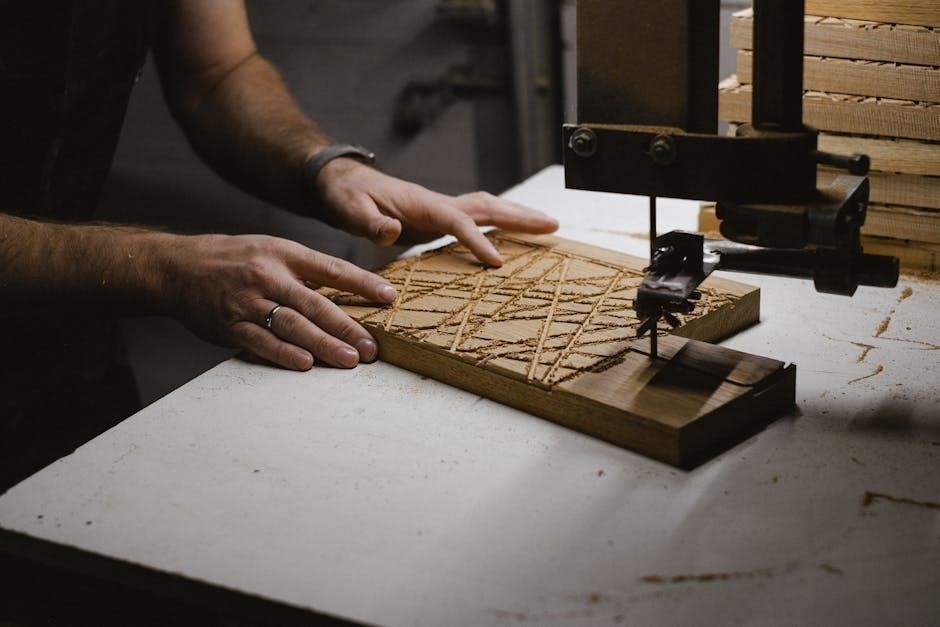
Biesemeyer fences are widely considered the pinnacle of table saw fence technology‚ celebrated for their exceptional accuracy and robust construction. Their design prioritizes smooth gliding action and unwavering parallelism‚ crucial for precise cuts. While representing a significant investment‚ the longevity and performance justify the cost for serious woodworkers.
These fences minimize drift and wobble‚ delivering professional-quality results consistently. They are a benchmark against which other fence systems are often measured.
Dewalt Table Saw Fences
Dewalt table saw fences offer a balance of functionality and affordability‚ making them a popular choice for both hobbyists and professionals. While not reaching the gold standard of Biesemeyer‚ Dewalt fences provide adequate accuracy and ease of use for many applications.
Users often find the assembly straightforward‚ though some note that the fence can feel somewhat “cheesy” compared to higher-end options. They represent a practical solution for those seeking a reliable fence without a premium price tag.
Shop Fox Table Saw Fences
Shop Fox table saw fences‚ like the W1716 Aluma-Classic‚ are frequently mentioned as a step up from basic factory fences‚ offering improved precision and features. These fences often incorporate aluminum construction‚ aiming for a blend of rigidity and lighter weight.
They are generally considered a good value proposition‚ providing a noticeable upgrade in cut quality and fence functionality for a reasonable investment. However‚ some users report limitations in ultimate precision compared to Biesemeyer-style fences.
Understanding Fence Adjustments
Precise fence adjustments are paramount for accurate table saw work. Micro-adjustments allow for incredibly fine-tuning of the fence position‚ crucial for repeatable cuts and achieving perfect dimensions. Regular fence alignment procedures are essential; checking for parallelism with the blade is vital.
Any deviation impacts cut accuracy. Proper adjustment ensures the fence remains square‚ preventing drift and wobble‚ ultimately leading to safer and more professional results. Consistent checks are key.
Micro-Adjustments for Precision Cuts

Micro-adjustments on a table saw fence represent a significant leap in cutting accuracy. These fine-tuning mechanisms allow for incremental fence movements‚ often measured in thousandths of an inch. This capability is invaluable when dealing with tight tolerances or needing to replicate cuts precisely.
High-quality fences‚ like Biesemeyer models‚ excel in this area. They enable users to “sneak up” on the desired setting‚ minimizing waste and maximizing precision for demanding woodworking projects.
Fence Alignment Procedures
Proper fence alignment is paramount for accurate table saw operation. Begin by ensuring the fence rails are parallel to the miter slots‚ utilizing a precision straightedge. Next‚ check for fence parallelism to the blade; any deviation introduces inaccuracies.
Locking mechanisms should be firmly engaged‚ preventing movement during cuts. Regularly inspect and tighten all mounting hardware. Consistent alignment checks‚ especially after adjustments or transport‚ guarantee optimal cutting performance and safety.
Table Saw Fence Accessories
Enhance your table saw’s capabilities with essential fence accessories. Fence extension wings provide increased support for wider stock‚ improving stability and accuracy during cuts. Featherboards maintain consistent pressure‚ preventing stock from wandering‚ while push sticks ensure safe hand positioning.
These additions significantly boost safety and precision. Utilizing these accessories minimizes kickback risk and delivers cleaner‚ more professional results. Investing in quality accessories maximizes your table saw’s potential.
Fence Extension Wings
Fence extension wings are invaluable for supporting larger workpieces‚ dramatically increasing cutting capacity beyond the standard fence length. These wings attach to the existing fence‚ providing a stable surface for wider boards‚ panels‚ and sheet goods.
They minimize flexing and vibration‚ leading to straighter‚ more accurate cuts. Investing in quality extension wings is crucial for handling substantial materials safely and efficiently‚ enhancing overall woodworking precision.
Featherboards and Push Sticks (Fence Related Safety)
Safety is paramount when operating a table saw‚ and accessories like featherboards and push sticks are essential when utilizing the fence. Featherboards maintain consistent pressure against the workpiece‚ preventing kickback and ensuring a straight cut along the fence.
Push sticks provide a safe means of guiding material past the blade‚ keeping hands at a secure distance. Employing both significantly reduces risk‚ promoting controlled and accurate cuts while maximizing operator protection.
Common Table Saw Fence Problems and Solutions
Fence drift and wobble are frequent issues‚ often stemming from loose locking mechanisms or rail misalignment. Regularly check and tighten all fence bolts and adjust the fence to ensure perfect parallelism with the blade.
Difficulty locking the fence can indicate worn components or debris obstructing the locking system. Cleaning and lubricating the mechanism‚ or replacing worn parts‚ usually resolves this. Consistent maintenance prevents these problems‚ ensuring accurate and safe operation.
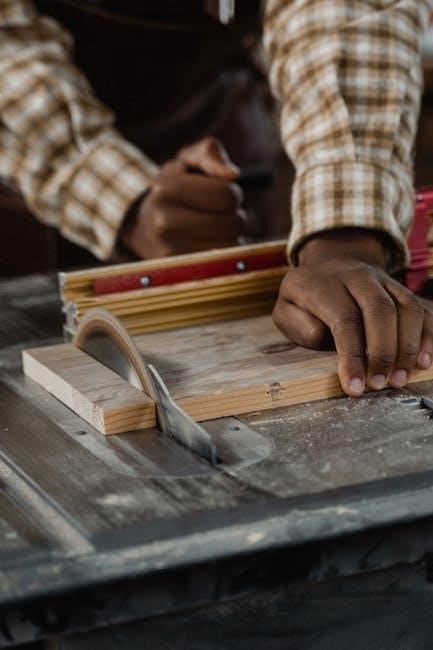
Fence Drift and Wobble

Fence drift‚ a common frustration‚ occurs when the fence subtly moves during a cut‚ compromising accuracy. Wobble indicates instability‚ often caused by loose locking mechanisms or a misaligned rail system. Regularly inspect and tighten all bolts securing the fence to the table.
Ensure the fence rail is perfectly straight and parallel to the blade. Addressing these issues promptly prevents inaccurate cuts and potential safety hazards‚ maintaining consistent‚ reliable performance.
Difficulty Locking the Fence
Difficulty locking the fence often stems from accumulated sawdust and debris within the locking mechanism‚ hindering smooth operation. Inspect the locking handle and rail for obstructions‚ cleaning thoroughly with a brush or compressed air. A worn or damaged locking lever can also cause issues‚ requiring replacement.
Lubricating the mechanism with a dry lubricant can improve functionality. If problems persist‚ verify the fence rail is properly aligned and free from bends or damage.
Fence Maintenance and Care
Regular fence maintenance is vital for sustained accuracy and longevity. Cleaning should occur after each use‚ removing sawdust and debris with a brush or vacuum to prevent locking mechanism issues. Periodically lubricate the fence rail and locking components with a dry lubricant‚ avoiding oils that attract dust.
Inspect for wear and tear‚ checking for loose bolts or damaged sections. Address any issues promptly to maintain precision and safety during operation.
Cleaning and Lubrication
Consistent cleaning is paramount for a smoothly functioning table saw fence; remove accumulated sawdust and wood particles after each use with a soft brush or vacuum. Avoid using compressed air‚ as it can drive debris into the mechanisms. Lubrication should be applied sparingly‚ utilizing a dry silicone spray or graphite.
Avoid oil-based lubricants‚ which attract dust and create a sticky residue. Focus on the rail‚ locking points‚ and any moving parts to ensure effortless operation and accuracy.
Inspecting for Wear and Tear
Regular inspection of your table saw fence is vital for maintaining precision and safety. Examine the fence rails for dents‚ bends‚ or any signs of damage that could affect parallelism. Check the locking mechanisms for smooth operation and secure engagement; loose components compromise accuracy.
Inspect fence faces for wear‚ and replace if necessary. Look for cracks or splits in cast iron or aluminum components. Addressing minor issues promptly prevents costly repairs and ensures consistent cut quality.
Fence Considerations for Portable Table Saws
Portable table saws often feature less robust fences compared to stationary models‚ frequently prioritizing affordability and compactness. Expect lighter-gauge materials and potentially less precise locking mechanisms. Prioritize stability; a wobbly fence severely impacts cut accuracy. Consider aftermarket upgrades for improved performance.
Evaluate fence travel – shorter lengths limit the width of stock you can reliably rip. While compromises are common‚ selecting a portable saw with the best available fence is crucial for quality work.
Fence Upgrades and Modifications
Upgrading a table saw fence can dramatically improve accuracy and usability. Popular modifications include replacing stock fences with Biesemeyer-style systems‚ known for their precision. Aftermarket rails and stanchions offer increased stability and smoother operation.
DIY modifications‚ like adding thicker fence faces or reinforcing locking mechanisms‚ are possible for skilled woodworkers. Carefully consider compatibility and potential impacts on safety before undertaking any modifications.
Budget-Friendly Fence Options
For woodworkers on a budget‚ several affordable fence options exist. The POWERTEC BS900RF Rip Fence and Dewalt 5140060-89 Fence Assembly represent cost-effective alternatives to high-end systems.
Consider upgrading components incrementally‚ starting with a better fence face or locking mechanism. While these options may not match the precision of Biesemeyer fences‚ they offer significant improvements over basic stock fences‚ enhancing cut quality and safety.
The Relationship Between Fence Quality and Cut Quality
A high-quality table saw fence directly correlates with superior cut accuracy and repeatability. Precise parallelism and a robust locking mechanism minimize deflection‚ ensuring straight‚ clean cuts. Cheaper fences often exhibit drift or wobble‚ leading to inaccuracies.
Investing in a better fence‚ like a Biesemeyer‚ reduces the need for constant adjustments and improves overall woodworking results. Ultimately‚ fence quality impacts project precision and professional finish.
Safety Precautions When Using a Table Saw Fence
Always prioritize safety when operating a table saw with a fence. Utilize featherboards and push sticks to maintain consistent pressure and keep hands clear of the blade. Never reach over or around a running blade‚ even with the fence in place.
Ensure the fence is securely locked before initiating any cut. Avoid distractions and maintain focus. Proper safety gear‚ including eye and ear protection‚ is essential for preventing injuries.
Resources for Further Research
For in-depth knowledge‚ explore woodworking forums and online communities dedicated to table saws and fence systems. Websites specializing in power tool reviews offer comparative analyses of different fence brands and styles.
Manufacturer websites‚ like Biesemeyer and Shop Fox‚ provide detailed specifications and user manuals; YouTube channels featuring experienced woodworkers demonstrate fence adjustments and safety practices. Consider books on woodworking techniques for a comprehensive understanding.