
Article Plan: Primary School Textbooks PDF (as of 12/10/2025 20:17:31)
This article comprehensively explores the increasing availability of primary school textbooks in PDF format, detailing resources like OpenStax, CK-12, and the Internet Archive.

It focuses on free options, subject-specific availability, legal considerations, and future digital trends impacting educational materials for young learners.
Digital textbooks in PDF format are rapidly gaining traction, offering accessible and cost-effective learning solutions for primary school students and educators alike.
This shift is driven by affordability, portability, and the growing availability of free, peer-reviewed resources, transforming traditional educational practices.
The Growing Demand for Digital Textbooks
The demand for digital textbooks, particularly in PDF format, is experiencing substantial growth within primary education. This surge is fueled by several converging factors, including increasing access to technology in schools and homes, and a recognized need for more affordable learning materials.
Traditional textbooks can be expensive, creating barriers to access for some families. PDF textbooks offer a viable, often free, alternative. Furthermore, the convenience of digital formats – portability, searchability, and ease of updating – appeals to both students and teachers. The rise of online learning, accelerated by recent global events, has further solidified the need for readily available digital resources.
Parents and educators are increasingly seeking supplementary materials and resources, and PDF textbooks fit seamlessly into blended learning environments.
Benefits of Using PDF Textbooks
Utilizing PDF textbooks for primary school students presents numerous advantages. Cost-effectiveness is paramount, as many resources are available free of charge through platforms like OpenStax and the Internet Archive, reducing financial burdens on families.
Portability is another key benefit; students can access textbooks on various devices – tablets, laptops, or even smartphones – eliminating the need to carry heavy physical books. PDFs also offer enhanced accessibility features, such as text-to-speech functionality and adjustable font sizes, catering to diverse learning needs.
Searchability allows for quick location of specific information, and the ability to print selected pages reduces paper consumption, promoting sustainability.
Scope of this Article: Focusing on Availability & Resources
This article specifically concentrates on the current landscape of primary school textbooks available in PDF format as of today, December 10, 2025. We will detail readily accessible, legally obtained resources, prioritizing free and open educational materials.
The focus is not on a comprehensive curriculum review, but rather a practical guide to locating downloadable textbooks. We will explore platforms like OpenStax, CK-12 Foundation, the Internet Archive, and Project Gutenberg, outlining their offerings for core subjects.
Legal considerations regarding copyright and usage will also be addressed, ensuring responsible access to these valuable educational tools.
Understanding “Primary School” & Core Subjects
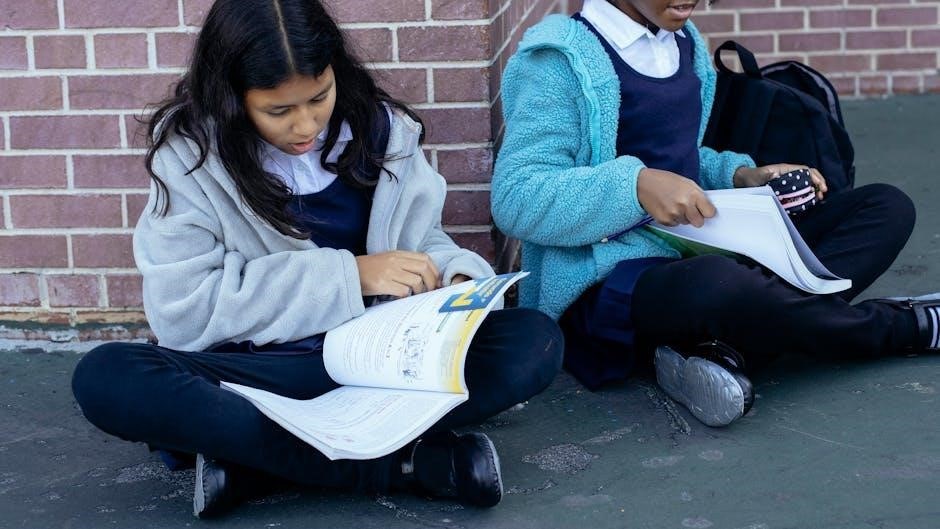
Primary school encompasses the foundational years of education, typically ages 5-11, covering essential subjects like mathematics, science, and language arts.
Defining “Primary School” – Age Groups & Grade Levels
Defining “primary school” varies slightly by region, but generally encompasses the initial phase of formal education. In many systems, it begins around age 5 with kindergarten or reception year, continuing through age 11.
Grade levels typically range from 1st to 6th grade, though some structures include a 7th grade before transitioning to middle school. This period is crucial for establishing foundational skills in literacy and numeracy.
Textbooks for these age groups are designed with age-appropriate content and engaging visuals. The availability of PDF versions allows for flexible access and cost-effective distribution, supporting diverse learning needs. Understanding these grade-level specifics is vital when searching for relevant primary school textbooks in digital formats.
Core Subjects Covered in Primary Education
Primary education fundamentally centers around several core subjects, forming the basis for future learning. These typically include Mathematics, focusing on number sense and basic operations; Science, introducing fundamental concepts in biology, chemistry, and physics; and English/Language Arts, developing reading, writing, and communication skills.
Social Studies, encompassing history, geography, and civics, is also crucial. Increasingly, schools integrate arts and physical education into the curriculum.
PDF textbooks are readily available for each of these subjects, offering accessible learning materials. The digital format allows for interactive exercises and supplementary resources, enhancing comprehension and engagement. Finding primary school textbooks in PDF format simplifies access to these essential subjects;
Importance of Foundational Learning
Foundational learning in primary school is critically important, establishing the cognitive and social-emotional skills necessary for future academic success. Strong foundations in reading, writing, and mathematics are particularly vital, enabling students to access and understand more complex concepts later on.
PDF textbooks play a key role in reinforcing these foundational skills, providing structured learning experiences.
Accessible and affordable primary school textbooks in PDF format democratize education, ensuring all students have access to quality learning materials; These resources support teachers in delivering effective instruction and fostering a love of learning from an early age, setting the stage for lifelong academic achievement.

Where to Find Free Primary School Textbooks PDF
Numerous online platforms offer free primary school textbooks in PDF format, including OpenStax, CK-12 Foundation, and resources utilizing the Free Documentation License (GNU).
OpenStax – Free, Peer-Reviewed Textbooks
OpenStax is a non-profit initiative dedicated to providing free, peer-reviewed, and openly licensed educational materials, including a growing collection of primary school textbooks available in PDF format.
These textbooks are designed to meet scope and sequence requirements and are easily adaptable for educators. They cover core subjects, offering a high-quality, cost-effective alternative to traditional textbooks.
OpenStax materials are developed by subject matter experts and rigorously reviewed for accuracy and clarity.
Educators can access these resources directly from the OpenStax website, download PDF versions for offline use, and even customize them to fit their specific curriculum needs. This commitment to accessibility makes OpenStax a valuable resource for schools and families seeking affordable educational options.
CK-12 Foundation – Extensive Digital Library
CK-12 Foundation offers an expansive digital library boasting over 5,000 concepts, providing a wealth of free educational resources, including primary school textbooks in PDF format.
Their platform extends beyond simple textbooks, incorporating interactive simulations, videos, and practice exercises to enhance the learning experience. CK-12 materials are adaptable, allowing teachers to customize content and align it with their curriculum.
The foundation’s commitment to open education means resources are freely available to anyone with an internet connection.
Users can access PDF downloads, alongside other formats, facilitating both online and offline study. CK-12 is a powerful tool for educators and students seeking flexible, high-quality, and cost-free learning materials.
Free Documentation License (GNU) Resources
Resources released under the Free Documentation License (GNU) represent a valuable source of openly available primary school textbooks in PDF format. This license promotes the free distribution and modification of educational materials, fostering collaboration and accessibility.
While a direct repository isn’t solely dedicated to primary school PDFs, many projects utilize this license, resulting in a growing collection of adaptable texts.
These resources often serve as core or supplementary materials for elementary, middle, and high school levels, offering a diverse range of subjects.
Users should verify the specific license terms for each document, ensuring compliance with attribution requirements. The GNU license empowers educators to tailor content to their students’ needs.
Specific Subject Resources – PDF Availability
Numerous platforms offer PDF textbooks for core subjects like mathematics, science, and English/Language Arts, catering to diverse primary school curricula.
Mathematics Textbooks (PDF)
Finding comprehensive mathematics textbooks in PDF format for primary school students requires exploring several key resources. OpenStax provides free, peer-reviewed options covering foundational concepts, while CK-12 Foundation boasts an extensive digital library with adaptable materials.
These resources often include workbooks and practice exercises alongside the core textbook content. The Internet Archive may contain digitized versions of older, out-of-copyright mathematics texts suitable for supplemental learning.
Teachers and parents should verify the alignment of these materials with specific curriculum standards. Focus on resources that offer clear explanations, illustrative examples, and opportunities for skill practice to ensure effective learning for young mathematicians.
Science Textbooks (PDF)

Locating free science textbooks in PDF format for primary school students involves utilizing digital libraries and open educational resources. CK-12 Foundation offers a robust collection covering biology, chemistry, and physics fundamentals, tailored for younger learners.
OpenStax, while potentially less extensive in early science, provides solid foundational materials. The Internet Archive can yield older, public domain science texts, useful for historical context or supplemental reading.
When selecting resources, prioritize those with engaging visuals, age-appropriate explanations, and interactive elements. Ensure the content aligns with national science standards and encourages exploration and critical thinking in young scientists.
English/Language Arts Textbooks (PDF)
Finding free English/Language Arts textbooks in PDF format requires exploring various online platforms. Project Gutenberg offers a wealth of classic literature suitable for older primary students, fostering a love for reading.
CK-12 Foundation provides grammar, writing, and reading comprehension resources specifically designed for elementary levels. OpenStax may have supplemental materials or introductory texts. The Internet Archive can host digitized versions of older reading primers and workbooks.
Prioritize materials that emphasize phonics, vocabulary building, and creative writing skills. Look for texts with diverse characters and engaging storylines to promote literacy and a lifelong passion for language.

Utilizing Online Platforms for Textbook Access
Online platforms like the Internet Archive and Project Gutenberg offer digitized books, including educational texts, providing accessible PDF resources for primary education.
Internet Archive – Digitized Books & Materials
The Internet Archive stands as a vast digital library, offering a remarkable collection of digitized materials, including a growing number of primary school textbooks available in PDF format. It functions as a non-profit organization dedicated to providing universal access to all knowledge.
Users can discover scanned copies of older textbooks, often those no longer in print, alongside more recent educational resources. Searching the archive requires utilizing relevant keywords, such as “primary school textbook,” specific grade levels (e.g., “grade 3 reading”), or subject areas (e.g., “elementary mathematics”).
While the quality of scans can vary, the Internet Archive represents a valuable resource for locating hard-to-find or out-of-copyright materials, supplementing other free textbook options. It’s important to verify the accuracy and currency of information found within these digitized texts.
Project Gutenberg – Free eBooks, Including Educational Texts
Project Gutenberg offers a substantial catalog of over 70,000 free eBooks, with a selection including educational texts suitable for primary school students, often available in PDF and other digital formats. It focuses primarily on older works where copyright has expired, providing access to classic literature and historical educational materials.
While not a primary source for current textbooks aligned with modern curricula, Project Gutenberg can be valuable for finding foundational reading materials and historical perspectives on education. Searching for keywords like “elementary reading” or specific authors known for children’s literature can yield relevant results.

Users should note that the texts are generally older and may require adaptation for contemporary learning standards. However, it remains a significant resource for free, legally accessible educational content.
Online Educational Repositories & Websites
Beyond the major platforms, numerous online educational repositories and websites offer PDF versions of primary school textbooks or supplementary learning materials. These include dedicated educational resource sites, school district websites sharing open educational resources (OER), and university repositories hosting digitized collections.
Examples often feature teacher-created materials, lesson plans incorporating textbook content, and curated lists of free online resources. A diligent search using keywords like “free primary school resources,” “elementary school OER,” or specific subject areas can uncover valuable finds.
However, quality and copyright compliance can vary significantly; careful evaluation of source credibility is crucial before utilizing these materials.

Considerations When Downloading & Using PDF Textbooks
Prioritize verifying textbook accuracy, ensuring legal compliance with copyright, and confirming device compatibility with necessary PDF readers for optimal learning.
Ensuring Textbook Quality & Accuracy
When sourcing primary school textbooks in PDF format, diligent verification of content quality is paramount. Not all online resources adhere to rigorous academic standards. Prioritize materials from reputable sources like OpenStax and CK-12 Foundation, which employ peer-review processes.
Cross-reference information with established curricula and educational guidelines to identify potential inaccuracies or outdated content. Look for textbooks aligned with national or regional learning objectives. Scrutinize for errors in grammar, spelling, and factual information.
Consider the publication date; newer editions generally reflect current research and pedagogical best practices. Always supplement PDF textbooks with other learning resources and teacher guidance to ensure a comprehensive and accurate educational experience.
Copyright & Legal Usage of PDF Materials
Downloading and utilizing primary school textbooks in PDF format necessitates careful attention to copyright laws. While many resources offer free access, understanding usage rights is crucial. Materials under the Free Documentation License (GNU) generally permit free distribution and modification, but attribution may be required.
Textbooks from OpenStax are openly licensed, allowing for broad use. However, commercially published textbooks, even in PDF form, typically retain copyright protection. Unauthorized reproduction or distribution constitutes infringement.
Always check the licensing terms associated with each PDF textbook before downloading or sharing. Respecting copyright ensures continued access to educational resources and supports authors and publishers.
Device Compatibility & PDF Readers
PDF format offers broad device compatibility, making primary school textbooks accessible on smartphones, tablets, laptops, and desktop computers. However, a PDF reader is essential. Adobe Acrobat Reader is the industry standard, available as a free download for most operating systems.
Alternative readers include Foxit Reader and built-in viewers in web browsers like Chrome and Edge. Consider screen size and resolution when viewing PDFs on smaller devices; zooming and panning may be necessary. Some PDFs may contain interactive elements or require specific software features.
Ensure your device meets the minimum system requirements for the PDF reader and that the reader is updated for optimal performance and security.

Supplementary Resources & Learning Materials
Enhance learning with PDF worksheets, engaging educational videos, interactive simulations, and fun flashcards—complementing primary school textbooks for a richer experience.
Worksheets & Practice Exercises (PDF)
Alongside primary school textbooks in PDF format, a wealth of supplementary worksheets and practice exercises are readily available online, bolstering student comprehension and skill development. These resources often align directly with textbook content, providing targeted practice in key areas like mathematics, reading comprehension, and scientific concepts.
Many educational websites and repositories offer downloadable PDF worksheets categorized by grade level and subject. These materials frequently include answer keys for self-assessment and teacher convenience. Utilizing these supplementary exercises allows students to reinforce learned concepts, identify areas needing further attention, and build confidence in their abilities.
Furthermore, the accessibility of PDF format ensures easy printing and distribution, making them a valuable tool for both classroom instruction and home-based learning. They represent a cost-effective way to expand upon textbook material and cater to diverse learning styles.
Educational Videos & Interactive Simulations
Complementing primary school textbooks in PDF format, educational videos and interactive simulations offer dynamic learning experiences that cater to diverse learning styles. These resources transform abstract concepts into engaging visuals, enhancing comprehension and retention. Platforms like YouTube and dedicated educational websites host a vast library of videos covering core subjects, often aligning with specific textbook chapters.
Interactive simulations allow students to actively explore scientific principles, mathematical concepts, and historical events, fostering a deeper understanding through hands-on learning. These digital tools provide a safe and controlled environment for experimentation and discovery.
Integrating these multimedia resources alongside PDF textbooks creates a blended learning approach, maximizing student engagement and academic outcomes. They provide alternative explanations and reinforce key concepts in an accessible and stimulating manner.
Flashcards & Learning Games
Alongside primary school textbooks in PDF format, flashcards and learning games serve as powerful supplementary tools for reinforcing key concepts and improving memorization. Digital flashcards, available through platforms like Quizlet, offer customizable study sets covering vocabulary, math facts, and scientific definitions. These are easily accessible on various devices, promoting flexible learning.
Learning games transform studying into an enjoyable experience, motivating students to actively participate and master essential skills. Many websites offer free educational games aligned with primary school curricula, covering subjects like reading, math, and science.
These interactive resources provide immediate feedback, helping students identify areas where they need further practice. Combining these tools with PDF textbooks creates a well-rounded learning approach, catering to different learning preferences.
The Future of Primary School Textbooks – Digital Trends
Digital textbooks are evolving with interactive eBooks, personalized learning paths, and AI integration, enhancing engagement and adapting to individual student needs.
Interactive eBooks & Enhanced Learning Experiences
Traditional PDF textbooks are giving way to dynamic, interactive eBooks, revolutionizing primary education. These enhanced digital resources incorporate multimedia elements – videos, animations, and audio – to cater to diverse learning styles and boost comprehension.
Interactive features, such as embedded quizzes, drag-and-drop activities, and virtual field trips, actively engage students, fostering a more immersive and enjoyable learning experience. Furthermore, these eBooks often provide immediate feedback, allowing students to identify and address knowledge gaps in real-time.
The shift towards interactive eBooks isn’t merely about adding bells and whistles; it’s about creating a more effective and personalized learning journey for every child, leveraging the power of digital technology.
Personalized Learning Paths & Adaptive Textbooks
The future of primary school textbooks lies in personalization. Adaptive textbooks, powered by algorithms, analyze a student’s performance and tailor the learning path accordingly. These systems identify strengths and weaknesses, adjusting the difficulty level and content presented to each individual.
Instead of a one-size-fits-all approach, students receive targeted support where they need it most, accelerating their progress and boosting confidence. PDF-based platforms are increasingly integrating these adaptive features, offering customized exercises and recommendations.
This shift allows educators to focus on individual student needs, providing more effective and engaging instruction, ultimately maximizing learning outcomes for every child.
The Role of AI in Textbook Development
Artificial Intelligence (AI) is poised to revolutionize primary school textbook creation and delivery, even within PDF formats. AI algorithms can analyze vast datasets of educational content to identify gaps and areas for improvement, ensuring textbooks are current and aligned with learning standards.
Furthermore, AI can automate tasks like content generation, image selection, and even translation, reducing development costs and accelerating publication timelines. AI-powered tools can also personalize textbook content, adapting to individual student learning styles and needs.
This integration promises more engaging, effective, and accessible learning materials for all primary school students, enhancing the value of PDF textbooks.