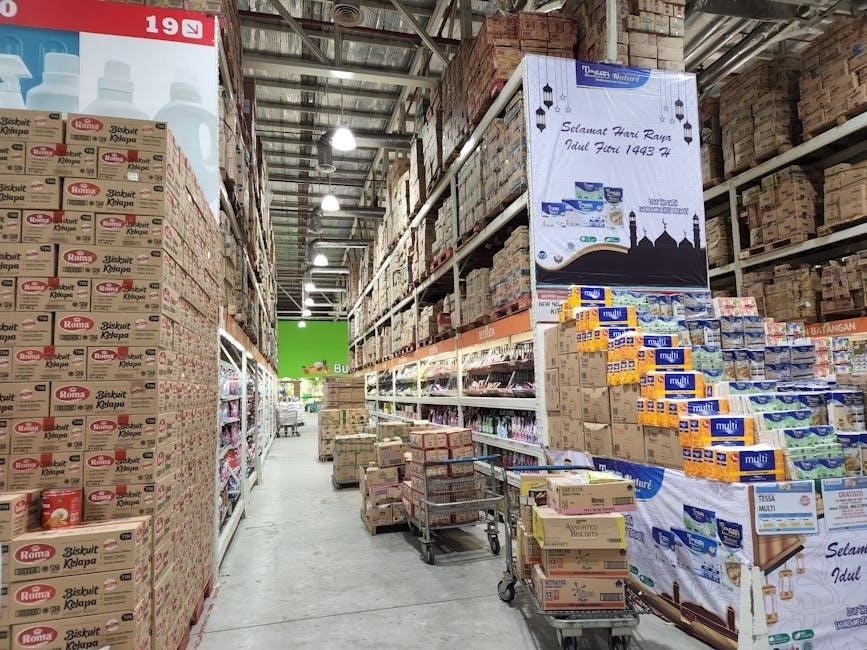
Navigating warehouse storage begins with understanding pallet rack systems. This guide details identifying various rack types‚ components‚ and crucial safety aspects for efficient operations.
What are Pallet Racks?
Pallet racks are essential storage solutions in warehouses and distribution centers‚ designed to efficiently organize and access palletized goods; These systems utilize vertical storage‚ maximizing space utilization compared to floor stacking. They consist of uprights (posts) and horizontal beams‚ creating bays where pallets are placed.
Different rack types cater to varying needs – selective racks offer easy access to all pallets‚ while drive-in racks maximize density. Understanding these fundamental components and configurations is crucial for proper identification and safe operation. Pallet racks aren’t just about storage; they’re about optimizing workflow and ensuring product integrity within a facility.
Why Proper Identification Matters
Accurate pallet rack identification is paramount for warehouse safety‚ efficiency‚ and compliance. Knowing the rack type‚ capacity‚ and condition prevents overloading‚ potential collapses‚ and worker injuries. Correct identification also streamlines maintenance‚ repairs‚ and future expansion or reconfiguration of the storage system.
Misidentified racks can lead to incorrect load placement‚ compromising structural integrity. Furthermore‚ understanding manufacturer markings and date codes aids in tracking rack history and ensuring adherence to industry standards like those set by RMI. Proper identification isn’t merely a best practice; it’s a critical component of responsible warehouse management.

Types of Pallet Racks
Diverse rack systems cater to varied needs. Common types include selective‚ drive-in‚ push-back‚ flow‚ and cantilever racks‚ each offering unique storage solutions.
Selective Pallet Racks
Selective pallet racks represent the most common storage solution in many warehouses. They offer direct access to every pallet on a first-in‚ first-out (FIFO) basis‚ making them incredibly versatile. Characterized by upright frames and horizontal beams‚ these racks allow for 100% accessibility of stored goods.
Identification is straightforward: look for uprights with step beams or box beams connecting them. The open rack structure facilitates easy loading and unloading using forklifts. While offering maximum accessibility‚ selective racks typically have lower storage density compared to other systems. They are ideal for a high volume of different SKUs and fast product turnover‚ making them a foundational element in numerous distribution centers and storage facilities.
Drive-In Pallet Racks
Drive-in pallet racks maximize storage density by allowing forklifts to drive directly into the rack structure. Pallets are loaded and unloaded from the same side‚ creating a last-in‚ first-out (LIFO) system. These racks utilize rails along which the forklift travels‚ supporting the pallet’s weight.

Identifying features include the lack of uprights between rows‚ replaced by a single continuous row of rails. This configuration significantly reduces aisle space‚ increasing storage capacity. However‚ access is limited as you must remove pallets in front to reach those further back. Drive-in racks are best suited for storing large quantities of a few SKUs‚ particularly those with slower turnover rates‚ optimizing space utilization.
Push Back Pallet Racks
Push back racking systems offer a high-density storage solution utilizing nested carts on inclined rails. Forklifts push pallets onto these carts‚ which then roll back along the rails when the next pallet is loaded‚ creating a LIFO (last-in‚ first-out) system. This design maximizes space while maintaining relatively good accessibility.
Key identifiers include the angled rails visible within each bay and the nested carts. Unlike drive-in racks‚ push back allows for multiple pallets deep within a bay without completely blocking access to others. They are ideal for storing multiple SKUs with moderate turnover‚ offering a balance between density and accessibility. Regular inspection of the cart wheels and rails is crucial for smooth operation.
Pallet Flow Racks
Pallet flow racks‚ also known as gravity flow racks‚ utilize a series of inclined rollers within a rack structure to move pallets forward as each one is removed. This creates a FIFO (first-in‚ first-out) inventory system‚ perfect for date-sensitive goods like food or pharmaceuticals. They significantly reduce labor costs associated with pallet movement.
Identifying features include the visible rollers or wheels within each bay‚ and a slight downward slope. Unlike push-back racks‚ pallets move automatically without forklift intervention. Flow racks are often used in distribution centers and warehouses needing efficient throughput. Regular maintenance of the rollers is vital to ensure smooth‚ uninterrupted pallet flow and prevent system jams.
Cantilever Racks
Cantilever racks are uniquely designed for storing long‚ bulky items that traditional pallet racking struggles with – think lumber‚ pipes‚ or furniture. They feature uprights with horizontal arms extending outward‚ lacking front columns to obstruct loading and unloading. This open-front design provides easy access to each stored item.
Identification is straightforward: look for the single‚ projecting arms without obstructing uprights. Capacity is determined by arm length‚ upright height‚ and baseplate stability. Cantilever racks are commonly found in lumberyards‚ metal warehouses‚ and building material suppliers; Proper baseplate anchoring is crucial for stability‚ especially with heavier loads‚ ensuring safe operation and preventing tip-overs.
Key Components & Identification
Pallet rack systems consist of uprights‚ beams‚ connectors‚ and baseplates. Understanding each component’s function and identifying its type is vital for safety and maintenance.
Uprights (Posts)
Uprights‚ also known as posts‚ form the vertical structure of a pallet rack system‚ providing the primary load-bearing support. They are crucial for overall stability and capacity. Identifying upright types – roll formed versus structural – is essential for assessing rack strength and suitability for specific loads.
Roll formed uprights are commonly used for lighter loads and are manufactured by bending sheet metal into a specific profile. Structural uprights‚ constructed from hot-formed steel‚ offer significantly higher weight capacity and are ideal for demanding applications. Examining the steel gauge and profile helps determine the upright’s load-bearing capabilities. Look for visible weld points or manufacturing marks to differentiate between the two types‚ ensuring proper load distribution and safety within the warehouse.
Frame Types (Roll Formed vs. Structural)
Distinguishing between roll formed and structural pallet rack frames is vital for safety and capacity assessment. Roll formed frames utilize continuously bent steel‚ offering cost-effectiveness for lighter loads. They’re identified by their distinct‚ often “C” shaped profile‚ and are suitable for general warehousing needs;
Structural frames‚ conversely‚ are constructed from hollow structural steel (HSS) sections‚ welded together. This construction provides superior strength and rigidity‚ making them ideal for high-density storage and heavier pallet loads. Look for visible weld points and thicker steel gauges. Structural frames are generally more expensive but offer a significantly higher load capacity and increased durability‚ ensuring long-term reliability.

Beams (Levels)
Pallet rack beams‚ also known as levels‚ directly support the stored pallets and are crucial for load distribution. Identifying beam types – step beam versus box beam – is essential for understanding rack capacity and configuration. Step beams feature a stepped or tiered design‚ offering adjustable load placement options and are commonly found in lighter-duty systems.
Box beams‚ conversely‚ have a fully enclosed rectangular profile‚ providing greater strength and torsional rigidity. They are ideal for heavier loads and wider pallet sizes. Inspect beams for damage like bending or cracking‚ as these compromise structural integrity. Proper beam selection and maintenance are paramount for warehouse safety and efficiency.
Step Beam vs. Box Beam Identification
Distinguishing between step beams and box beams is vital for assessing pallet rack capacity and suitability. Step beams exhibit a distinct “stepped” profile‚ with indentations allowing for adjustable pallet support. This design makes them cost-effective for lighter loads and varied pallet dimensions.
Box beams‚ in contrast‚ possess a fully enclosed‚ rectangular cross-section‚ offering superior strength and stability. Their robust construction handles heavier loads and wider pallet configurations effectively. Visually‚ box beams appear solid‚ while step beams have visible “steps;” Identifying the beam type aids in determining appropriate load limits and ensuring safe warehouse operations.
Connectors & Hardware
Pallet rack connectors and hardware are critical for structural integrity and safety. These components secure uprights and beams‚ distributing weight and preventing collapse. Common connectors include pins‚ clips‚ and locking mechanisms‚ each designed for specific rack types and load capacities.
Pin types vary – some are simple shear pins‚ while others feature locking collars for enhanced security. Regularly inspect these components for wear‚ damage‚ or corrosion. Proper hardware ensures a stable and reliable storage system. Identifying the correct hardware for each connection point is paramount for maintaining rack safety and preventing accidents within the warehouse environment.
Pin Types & Locking Mechanisms
Pallet rack pins are fundamental connectors‚ varying in design and function. Common types include ball lock pins‚ which offer quick installation and removal‚ and shear pins designed to fail under excessive load‚ protecting the rack structure. Locking mechanisms‚ like cotter pins or spring-loaded pins‚ add an extra layer of security‚ preventing accidental disengagement.
Identifying pin types is crucial for proper replacement and maintenance. Damaged or missing pins compromise rack stability. Regularly inspect pins for bending‚ corrosion‚ or wear. Understanding the locking mechanism’s operation ensures secure connections and prevents potential collapses‚ safeguarding both personnel and stored goods.
Baseplates & Anchors
Baseplates form the foundation of a pallet rack system‚ distributing weight to the floor. They are typically steel plates with pre-drilled holes for anchoring. Anchors secure the rack to the concrete floor‚ preventing tipping or movement. Common anchor types include wedge anchors‚ sleeve anchors‚ and through-bolts‚ each suited for different floor conditions and load requirements.
Proper baseplate and anchor selection is vital for stability; Inspect baseplates for corrosion or damage. Ensure anchors are appropriately sized and installed according to manufacturer specifications and local building codes. A secure foundation is paramount for preventing rack failure and maintaining warehouse safety.

Identifying Pallet Rack Capacity
Determining rack capacity involves locating load capacity labels and understanding weight ratings. These ratings ensure safe storage and prevent structural failures.
Load Capacity Labels
Locating and interpreting load capacity labels is paramount for safe pallet rack usage. These labels‚ typically affixed to upright frames‚ detail the maximum weight each bay or level can support. Understanding these markings prevents overloading‚ which compromises structural integrity and poses significant safety risks.
Labels often specify capacity based on beam height and rack configuration. Variations exist depending on the rack type (selective‚ drive-in‚ etc.). Always verify the label corresponds to the actual rack configuration. Missing or damaged labels necessitate a professional rack inspection to determine safe load limits. Ignoring capacity limits can lead to rack collapse‚ product loss‚ and potential injuries – making label adherence non-negotiable for warehouse safety.
Understanding Weight Ratings
Pallet rack weight ratings aren’t uniform; several factors dictate safe load limits. ‘Pair Capacity’ represents the total weight a rack pair (two uprights and beams) can handle. ‘Bay Capacity’ considers the entire bay‚ including multiple levels. ‘Level Capacity’ specifies the maximum weight per beam level.
These ratings assume evenly distributed loads. Concentrated loads – heavier items in one spot – significantly reduce capacity. Beam deflection also impacts ratings; excessive bending indicates overloading. Always consult manufacturer specifications and adhere to posted load limits. Ignoring these guidelines can lead to structural failure‚ potentially causing severe accidents and substantial financial losses. Prioritize safety by understanding and respecting these critical weight parameters.

Pallet Rack Condition Assessment
Regular inspections are vital for maintaining rack integrity and safety. Look for damage like bends‚ rust‚ or cracks‚ and promptly report any issues found.

Identifying Damage (Bent‚ Rusted‚ Cracked)
Thorough visual inspections are the first line of defense against pallet rack failure. Begin by carefully examining uprights for any noticeable bends or deformations‚ which compromise structural integrity. Rust‚ particularly at connection points‚ indicates corrosion and weakening of the steel.
Cracked welds or damaged bracing are critical warning signs demanding immediate attention. Inspect beams for similar issues – dents‚ cracks‚ or signs of previous impacts. Pay close attention to the rack’s baseplates and anchors; loose or corroded anchors significantly reduce stability.
Document all damage with photographs and detailed notes‚ noting the location and severity. Remember‚ even seemingly minor damage can escalate over time‚ leading to catastrophic collapse. Prioritize safety and address any concerns promptly.
Safety Inspections & Reporting
Regular‚ documented safety inspections are paramount for maintaining a secure warehouse environment. Inspections should be conducted by trained personnel‚ ideally quarterly‚ and after any impact or modification to the rack system. A comprehensive checklist should cover all components – uprights‚ beams‚ connectors‚ and anchors – for damage or wear.
Any identified damage must be reported immediately through a formal reporting system. This report should detail the location‚ type‚ and severity of the damage‚ along with photographic evidence.
Implement a ‘red tag’ system for severely damaged components‚ removing them from service until repaired or replaced. Maintain detailed records of all inspections‚ repairs‚ and replacements for audit purposes and to demonstrate due diligence.
Manufacturer Markings & Dating
Locating manufacturer stamps and date codes is vital for tracing rack history and verifying specifications. These markings aid in assessing age and compliance.
Locating Manufacturer Information
Identifying the pallet rack manufacturer is a crucial first step in determining its specifications and history. Typically‚ manufacturers imprint their name or logo directly onto the rack’s uprights (posts) and sometimes on the beams. Look closely at the vertical and horizontal structural members; markings are often stamped‚ embossed‚ or applied with a durable label.
These markings can be found on the frame itself‚ near the baseplate connection points‚ or on a small metal plate riveted to the upright. The location can vary depending on the manufacturer and the age of the rack. Often‚ a manufacturer’s mark will include a serial number or a part number‚ which can be used to trace the rack’s origin and access detailed specifications from the manufacturer’s documentation. Careful inspection of all rack components is essential to uncover this vital information.
Decoding Date Codes
Pallet rack date codes provide insight into the rack’s manufacturing date‚ aiding in condition assessment and safety evaluations. These codes aren’t standardized; each manufacturer employs a unique system. Common formats include numerical sequences representing the year‚ month‚ and sometimes even the day of production. Some utilize a letter-number combination‚ where letters denote months or quarters‚ and numbers signify the year.
Locating the manufacturer’s documentation is often key to deciphering these codes. Without it‚ interpretation can be challenging. Understanding the age of the rack helps determine potential material fatigue or the applicability of current safety standards. Older racks may not meet current regulations and require more frequent inspections. Careful examination and research are vital for accurate decoding.

Using Pallet Rack Diagrams & Blueprints
Rack layouts and component numbers are essential for accurate identification and assembly. Diagrams clarify configurations‚ while component numbers pinpoint specific parts for maintenance.
Interpreting Rack Layouts
Understanding pallet rack layouts is crucial for efficient warehouse management and safety. These diagrams visually represent the arrangement of racks‚ aisles‚ and storage locations within a facility. Key elements to decipher include rack types – selective‚ drive-in‚ or flow – indicated by specific symbols and configurations.
Aisle widths are clearly marked‚ dictating forklift maneuverability. Bay locations‚ often numbered or lettered‚ pinpoint specific storage spots. Pay attention to beam levels and their corresponding height adjustments.
Furthermore‚ blueprints often detail load capacities per bay‚ ensuring proper weight distribution. Identifying safety features‚ like guard rails or column protectors‚ is also vital. Accurate interpretation prevents overloading‚ collisions‚ and structural failures‚ ultimately optimizing warehouse space and minimizing risks.
Understanding Component Numbers
Pallet rack component numbers are essential for accurate parts ordering and system maintenance. Manufacturers assign unique identifiers to each element – uprights‚ beams‚ connectors‚ and baseplates – facilitating precise replacements and expansions. These numbers typically appear on stamped plates or labels affixed directly to the component.
Decoding these numbers often requires referencing the manufacturer’s catalog or parts list. The number usually specifies the component type‚ dimensions‚ gauge of steel‚ and finish.
Correctly identifying components prevents compatibility issues and ensures structural integrity. Utilizing component numbers streamlines inventory management and simplifies communication with suppliers‚ leading to efficient warehouse operations and reduced downtime. Accurate record-keeping is paramount for long-term system health.
Resources for Pallet Rack Identification
Numerous online databases‚ catalogs‚ and industry standards (like RMI) offer valuable assistance. Official help centers provide tutorials and FAQs for guidance.
Online Databases & Catalogs
Accessing comprehensive online resources is crucial for accurate pallet rack identification. Several websites specialize in warehouse equipment‚ offering detailed catalogs with specifications‚ diagrams‚ and component breakdowns. These platforms often allow searching by manufacturer‚ rack type‚ or specific part numbers‚ streamlining the identification process.
Furthermore‚ many suppliers maintain online databases showcasing their product lines‚ including older models. Exploring these resources can help pinpoint the origin and specifications of existing racks. Remember to cross-reference information from multiple sources to ensure accuracy. Utilizing these digital tools significantly simplifies the task of identifying pallet rack systems and their components‚ especially when dealing with unfamiliar setups or aged equipment.
Industry Standards & Regulations (RMI)
Adhering to Rack Manufacturers Institute (RMI) standards is paramount for pallet rack safety and proper identification. RMI publishes guidelines for design‚ testing‚ and installation‚ ensuring structural integrity and minimizing risk. These standards define load capacities‚ component specifications‚ and inspection protocols.
Understanding RMI’s ANSI MH16.1 specification is vital for assessing rack condition and verifying compliance. Regulations often mandate regular inspections performed by qualified individuals‚ documented with detailed reports. Familiarizing yourself with RMI publications and recommended practices is essential for maintaining a safe and efficient warehouse environment‚ and correctly identifying rack systems built to these crucial standards.
Advanced Identification Techniques
Precise measurements and detailed photographic records enhance rack identification. Utilizing tools and documentation provides comprehensive data for accurate assessments and future reference.
Using Measurement Tools
Accurate pallet rack identification often requires precise measurements of key components. A standard tape measure is essential for verifying upright height‚ beam length‚ and bay widths‚ ensuring compatibility with existing systems or planned layouts. Digital calipers can provide even greater precision when assessing the thickness of steel components‚ crucial for determining load capacity.
Laser distance measurers offer rapid and reliable measurements for larger distances‚ streamlining the inspection process. Angle finders are useful for confirming proper rack alignment and identifying potential distortions. Documenting these measurements alongside photographic evidence creates a comprehensive record for future reference‚ maintenance‚ or when sourcing replacement parts. Consistent measurement practices are vital for maintaining warehouse safety and operational efficiency.
Photographic Documentation
Visual records are invaluable for pallet rack identification and condition assessment. High-resolution photographs should capture overall rack structures‚ individual components (uprights‚ beams‚ connectors)‚ and any visible damage like dents‚ rust‚ or cracks. Detailed close-ups of manufacturer markings‚ date codes‚ and load capacity labels are essential for traceability.
Standardized photographic angles and lighting conditions ensure consistency across inspections. Include a scale or reference object in each photo for accurate size representation. Digital organization with clear file naming conventions (e.g.‚ rack location‚ date‚ component) facilitates easy retrieval. Photographic documentation serves as crucial evidence for safety reports‚ insurance claims‚ and future maintenance planning‚ bolstering overall warehouse management.