No Equipment Full Body Workout PDF: A Comprehensive Plan
Discover a convenient and effective fitness solution with our no-equipment full body workout PDF, perfect for achieving your goals anywhere, anytime, mirroring current home fitness trends!
Bodyweight training, a cornerstone of accessible fitness, utilizes your own weight as resistance, eliminating the need for expensive gym memberships or bulky equipment. This approach is incredibly versatile, allowing effective workouts in any location – your living room, a park, or even while traveling.
The beauty of bodyweight exercises lies in their scalability; variations exist for all fitness levels, from beginners to advanced athletes. As highlighted by recent trends, people are prioritizing home workouts, making bodyweight training exceptionally relevant.
This method focuses on functional movements, improving strength, endurance, flexibility, and balance simultaneously. It’s a fantastic starting point for building a solid fitness foundation, and as Arnold Schwarzenegger’s recent routine demonstrates, can deliver impactful results in minimal time.

Benefits of a No-Equipment Full Body Workout
Embrace the numerous advantages of a no-equipment full body workout! Beyond cost-effectiveness, these routines offer unparalleled convenience, fitting seamlessly into busy lifestyles. You’re no longer tethered to gym hours or locations, promoting consistency.
Full body circuits, as many are discovering, deliver a comprehensive workout, maximizing calorie burn and improving overall fitness. They enhance muscular endurance, cardiovascular health, and functional strength – skills applicable to everyday life.
Furthermore, bodyweight training minimizes injury risk compared to weighted exercises, making it ideal for beginners. It’s a fantastic way to build a strong foundation, as evidenced by the growing popularity of home workouts and routines shared by fitness icons.
Warm-up Exercises (5-10 Minutes)
Prioritize a thorough warm-up to prepare your body for the workout ahead! Dedicate 5-10 minutes to dynamic stretching and light cardio, increasing blood flow and muscle elasticity. This minimizes injury risk and maximizes performance.
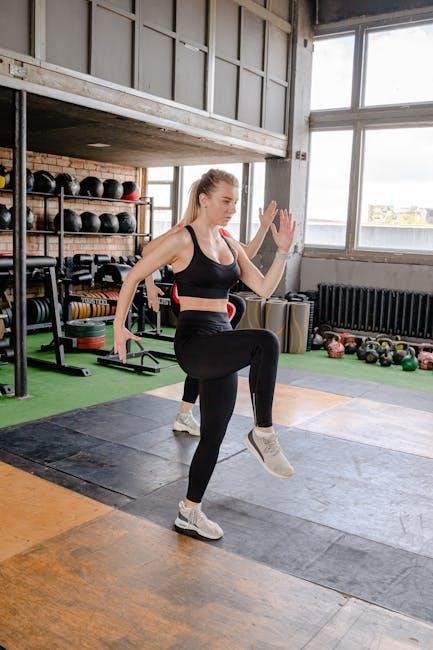
Begin with dynamic stretches like arm circles, leg swings, and torso twists, activating major muscle groups. Follow this with cardio bursts – jumping jacks and high knees are excellent choices – to elevate your heart rate.
A proper warm-up, crucial for any fitness routine, ensures your muscles are ready for the demands of the circuit, mirroring the preparation emphasized by fitness professionals and routines like Arnold Schwarzenegger’s.
Dynamic Stretching for Full Body Activation
Engage in dynamic stretches to enhance flexibility and prepare muscles for movement. Unlike static stretches, these involve controlled motions, increasing blood flow and range of motion. Begin with arm circles – forward and backward – to loosen shoulder joints.
Next, perform leg swings, both front-to-back and side-to-side, targeting hamstrings and hip flexors. Incorporate torso twists to activate core muscles and improve spinal mobility. Don’t forget inchworms, walking your hands forward from a standing position.
These movements prime your body for the workout, mirroring the importance of preparation highlighted in various fitness approaches, ensuring optimal performance and reducing the risk of injury during your no-equipment routine.
Cardio Warm-up (Jumping Jacks, High Knees)
Elevate your heart rate and boost circulation with a quick cardio warm-up. Start with jumping jacks – a classic exercise that engages multiple muscle groups simultaneously. Perform for 30-60 seconds, focusing on controlled movements and proper form.
Follow with high knees, bringing your knees as close to your chest as possible while maintaining a brisk pace. This targets your core and leg muscles. Continue for another 30-60 seconds. Consider adding butt kicks, kicking your heels towards your glutes.
These cardio bursts, essential for preparing your body, align with the emphasis on efficient workouts, maximizing calorie burn and enhancing overall fitness within your no-equipment PDF plan.
Workout Structure: Circuit Training
Embrace circuit training for a dynamic and time-efficient workout experience. This method involves performing a series of exercises, one after the other, with minimal rest in between. Complete one full cycle – all exercises – before taking a longer rest period.
Structure your circuit with exercises targeting different muscle groups, ensuring a full-body challenge. Aim for 3-4 rounds of the circuit, adjusting the number based on your fitness level. This approach, highlighted in recent fitness trends, maximizes calorie expenditure and builds endurance.
Our no-equipment PDF utilizes this structure, offering a versatile and effective path to achieving your fitness goals, mirroring the popularity of full-body circuits.
Upper Body Exercises
Strengthen your chest, shoulders, and arms with our effective no-equipment upper body exercises; Push-ups are foundational, with variations for all levels – from wall push-ups for beginners to standard and pike push-ups for advanced users.
Incline push-ups, utilizing a wall or elevated surface, offer a modified challenge, building strength progressively. Pike push-ups specifically target the shoulders, enhancing upper body definition. Remember, bodyweight exercises are incredibly effective, as noted in recent fitness discussions.
Our PDF provides detailed instructions and modifications, ensuring proper form and maximizing results, allowing you to build upper-body strength without any equipment.
Push-ups (Variations for Different Levels)
Master the push-up, a cornerstone of any no-equipment workout! Beginners can start with wall push-ups, reducing the angle and difficulty. Progress to incline push-ups using a stable surface like a bench or step, gradually increasing the challenge.
Standard push-ups build foundational strength. For an added challenge, try decline push-ups with your feet elevated, targeting the upper chest. Advanced individuals can incorporate diamond push-ups, focusing on the triceps.
Proper form is crucial – maintain a straight line from head to heels. Our PDF details each variation, ensuring safe and effective execution, mirroring advice from fitness experts emphasizing bodyweight training.
Incline Push-ups (Using a Wall or Elevated Surface)
Incline push-ups are an excellent modification for beginners or those building upper body strength. Utilizing a wall or stable elevated surface reduces the amount of bodyweight you’re lifting, making the exercise more accessible.
Position your hands shoulder-width apart on the surface, maintaining a straight line from head to heels. Lower your chest towards the surface, keeping your core engaged, and then push back up. Adjust the incline to modify difficulty.
This variation effectively targets the lower pectoral muscles and is a fantastic stepping stone towards mastering standard push-ups, aligning with the principles of progressive overload in bodyweight training.
Pike Push-ups (Targeting Shoulders)
Pike push-ups are a challenging bodyweight exercise specifically designed to target the shoulder muscles – particularly the anterior deltoids – offering a potent alternative when equipment is limited.
Assume a push-up position, but lift your hips upwards, forming an inverted V-shape with your body. Keep your back straight and core engaged. Lower your head towards the floor, bending at the elbows, and then push back up.
This movement mimics a shoulder press, providing significant stimulus to the deltoids. It’s a great progression from standard push-ups, demanding greater strength and stability, and is ideal for building functional upper body power.
Lower Body Exercises
Strengthen and tone your legs and glutes with our effective no-equipment lower body exercises, crucial for a balanced full-body workout. These movements enhance functional strength and improve overall athletic performance.
We’ll focus on variations of squats, lunges, and glute bridges. Squats build overall leg strength, while lunges target individual legs, improving balance and coordination. Glute bridges isolate and strengthen the glutes and hamstrings, contributing to a powerful posterior chain.
These exercises require no equipment, making them accessible anywhere, and can be modified to suit different fitness levels. Proper form is key to maximizing results and preventing injury, so focus on controlled movements.
Squats (Basic and Variations)
Master the foundational squat, a cornerstone of any effective no-equipment workout. Begin with basic squats, focusing on maintaining a straight back and controlled descent, as if sitting into a chair. Ensure your knees track over your toes.
Progress to variations like jump squats for added cardio and explosive power, or pulse squats for increased endurance; Sumo squats, with a wider stance, target inner thighs. Bulgarian split squats, using a raised surface, challenge balance and isolate each leg.
Remember to prioritize proper form over speed or depth. Start with a manageable number of repetitions and gradually increase as your strength improves. Squats build lower body strength and contribute to overall functional fitness.
Lunges (Forward, Reverse, and Lateral)
Incorporate lunges to sculpt and strengthen your legs and glutes without any equipment. Start with forward lunges, stepping forward and lowering your body until both knees are bent at 90 degrees. Maintain a straight back and engaged core.
Introduce reverse lunges for a variation that’s gentler on the knees, stepping backward instead of forward. Lateral lunges target the inner and outer thighs, stepping to the side and bending one knee while keeping the other leg straight.
Focus on controlled movements and proper form to maximize effectiveness and prevent injury. Vary your lunge types to challenge different muscle groups and enhance overall lower body strength and stability.
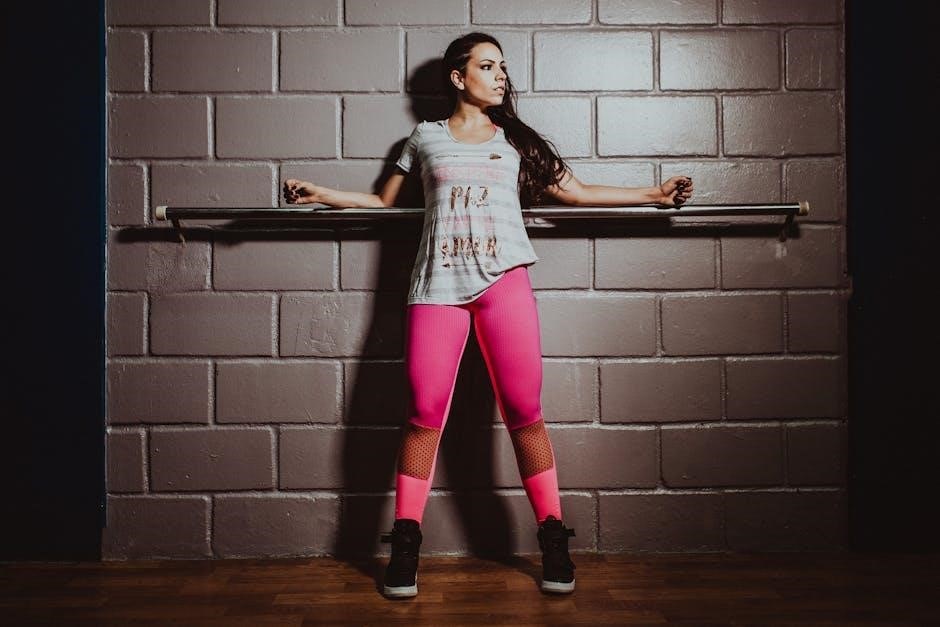
Glute Bridges (Strengthening Glutes and Hamstrings)
Activate your glutes and hamstrings with glute bridges, a fantastic exercise requiring no equipment. Lie on your back with knees bent and feet flat on the floor. Lift your hips off the ground, squeezing your glutes at the top of the movement.
Maintain a straight line from your shoulders to your knees throughout the exercise. For increased difficulty, perform single-leg glute bridges, lifting one leg towards the ceiling while performing the bridge.
Focus on controlled movements and a full range of motion to maximize muscle engagement. Glute bridges improve hip extension, core stability, and overall lower body strength, contributing to a well-rounded workout.
Core Exercises
Strengthen your core with these essential no-equipment exercises. A strong core is fundamental for stability, balance, and overall fitness. We’ll focus on exercises that require no equipment, making them accessible anywhere.
Incorporate variations to challenge yourself and target different core muscles. These exercises will enhance your posture, improve athletic performance, and reduce the risk of injury. Remember to maintain proper form throughout each exercise to maximize effectiveness and prevent strain.
Expect to feel the burn as you engage your abdominal muscles, obliques, and lower back. Consistent core work is key to achieving a strong and stable physique.
Plank (Standard and Variations)
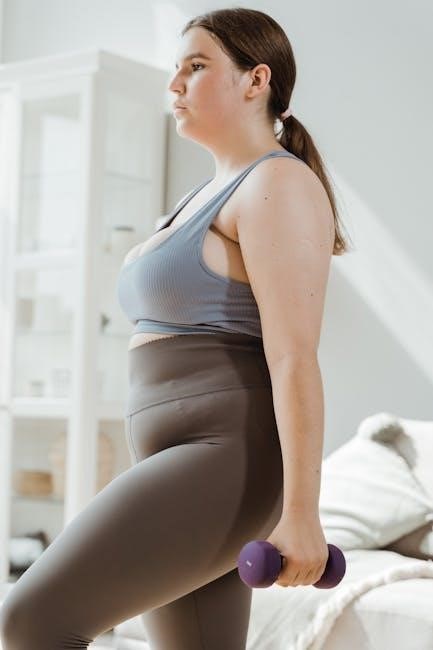
The plank is a foundational core exercise requiring no equipment. Begin in a push-up position, lowering onto your forearms, maintaining a straight line from head to heels. Engage your core, glutes, and legs to prevent sagging or lifting.
Hold the standard plank for 30-60 seconds, focusing on controlled breathing. Variations include side planks, targeting obliques, and plank jacks, adding a cardio element. Forearm plank taps challenge stability, while walking planks increase dynamic core strength.
Progress by increasing hold times or incorporating more challenging variations. Proper form is crucial; avoid arching your back or letting your hips drop.
Crunches (Proper Form and Technique)
Crunches effectively target the rectus abdominis, but proper form is paramount to avoid neck strain. Lie on your back with knees bent and feet flat, hands lightly supporting your head – avoid pulling on your neck.
Engage your core and lift your shoulders off the ground, focusing on contracting your abdominal muscles, not momentum. Exhale during the contraction and inhale as you lower back down slowly. Avoid fully sitting up, as this engages hip flexors more than abs.
Variations include bicycle crunches and reverse crunches for a more comprehensive core workout. Prioritize controlled movements over speed.
Russian Twists (Engaging Obliques)
Russian twists are excellent for strengthening your obliques and improving rotational core strength, requiring no equipment. Sit on the floor with your knees bent and feet slightly elevated – for beginners, keep feet on the ground for stability;
Lean back slightly, maintaining a straight spine, and twist your torso from side to side, engaging your obliques with each movement. You can enhance the challenge by holding a light object, like a water bottle, during the twists.
Focus on controlled rotations, avoiding jerky movements. Remember to breathe deeply and maintain core engagement throughout the exercise for maximum effectiveness.
Cardio Bursts (Integrated into the Circuit)
Elevate your heart rate and boost calorie burn by incorporating cardio bursts within your circuit training. These short, intense intervals maximize efficiency, making your no-equipment workout even more effective. Consider integrating exercises like burpees and mountain climbers.
Burpees offer a full-body challenge, combining a squat, push-up, and jump. Mountain climbers engage your core while rapidly driving your knees towards your chest. These bursts should be performed for 30-60 seconds, followed by a brief recovery period.
Strategic placement of cardio bursts between strength exercises keeps your metabolism elevated and enhances overall fitness gains, mirroring popular high-intensity interval training (HIIT) principles.
Burpees (Full Body Cardio and Strength)
Burpees are a powerhouse exercise, seamlessly blending cardio and strength training into one dynamic movement. Begin in a standing position, drop into a squat with hands on the floor, kick your feet back into a push-up position, perform a push-up, return to the squat, and explosively jump upwards.
This full-body exercise targets your chest, shoulders, triceps, core, and legs, making it incredibly efficient for a no-equipment workout. Focus on maintaining proper form throughout each repetition to maximize benefits and prevent injury.
Modify by stepping back instead of jumping, or omitting the push-up for a lower-impact variation. Aim for 3 sets of 8-12 repetitions, adjusting based on your fitness level.
Mountain Climbers (Core and Cardio)
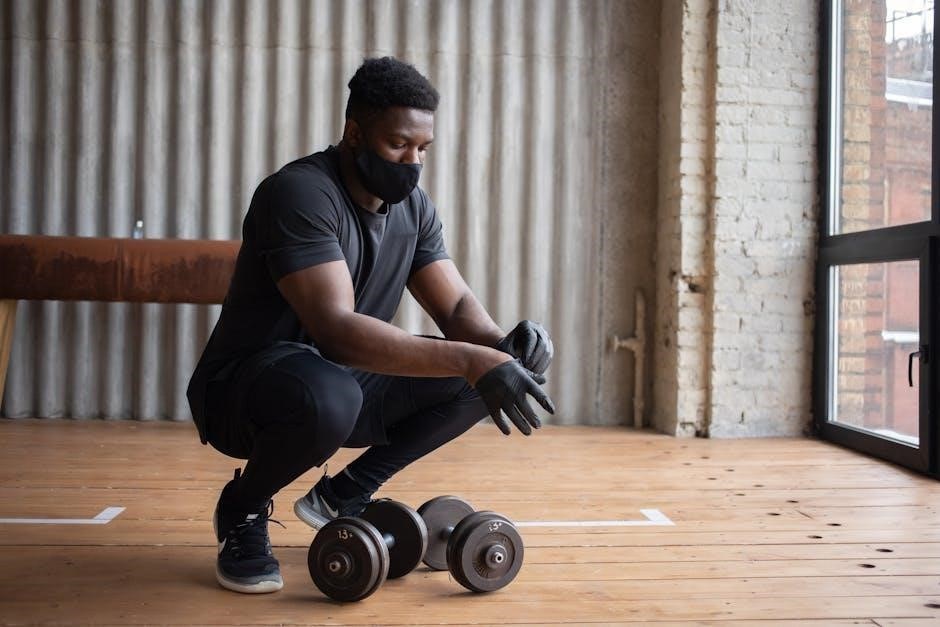
Mountain climbers are a fantastic exercise for boosting your heart rate and strengthening your core, requiring no equipment at all. Start in a plank position, hands shoulder-width apart, body in a straight line. Bring one knee towards your chest, then quickly alternate, mimicking a climbing motion.
Engage your core throughout the exercise to maintain stability and prevent your hips from sagging. Focus on driving your knees towards your chest with controlled movements, keeping your back flat.
Perform for 30-60 seconds, aiming for 3 sets with short rests in between. Adjust the pace to match your fitness level, prioritizing form over speed.
Cool-down and Static Stretching (5-10 Minutes)
Concluding your no-equipment workout with a proper cool-down is crucial for muscle recovery and flexibility. Spend 5-10 minutes performing static stretches, holding each stretch for 20-30 seconds. Focus on major muscle groups worked during the session, like quads, hamstrings, calves, chest, and triceps.
Examples include hamstring stretches, quad stretches, triceps stretches, and chest openers. Breathe deeply and relax into each stretch, avoiding any bouncing movements. This helps to reduce muscle soreness and improve range of motion.
Prioritizing a cool-down prevents injury and enhances the benefits of your full-body workout, ensuring long-term fitness success.
Creating a Printable PDF Workout Plan
To maximize convenience, transform your no-equipment full body workout into a printable PDF. Utilize readily available online tools or word processing software to create a clear, organized document. Include exercises, sets, repetitions, and rest times for each circuit.
Consider adding visual aids, like simple illustrations or links to online demonstrations, for proper form. Organize the plan logically, perhaps by workout day or muscle group focus. Save the document as a PDF to preserve formatting across devices.
Having a physical or digital PDF ensures easy access and promotes consistency in your fitness routine, supporting your goals.
Workout Frequency and Progression
Begin with 2-3 no-equipment full body workouts per week, allowing for adequate recovery between sessions. As your strength and endurance improve, gradually increase the frequency to 4 times weekly. Progression is key – don’t plateau!
Adjust difficulty by increasing repetitions, sets, or reducing rest times. Explore more challenging exercise variations, like decline push-ups or pistol squats. Tracking your progress—reps, sets, and how you feel—is vital. Set realistic goals, such as mastering a new variation or increasing workout duration.
Consistent monitoring and adjustments ensure continued improvement and prevent plateaus, maximizing your results.
Adjusting Difficulty and Repetitions
To continually challenge yourself, modify the difficulty of exercises within your no-equipment full body workout PDF. Begin by adjusting repetitions; increase them as you gain strength, aiming for 12-15 reps per set. If an exercise feels too easy, explore variations – incline push-ups become standard, then decline.
Reduce rest times between sets to increase intensity. Consider adding sets; move from three to four. For advanced users, try slowing down the eccentric (lowering) phase of movements. Listen to your body; prioritize form over quantity. Proper technique prevents injury and maximizes effectiveness.
Tracking Progress and Setting Goals
Effectively monitor your fitness journey with your no-equipment full body workout PDF by diligently tracking progress. Record repetitions, sets, and rest times for each exercise. Note how you feel – perceived exertion is crucial. Set realistic, achievable goals, like increasing push-up count weekly.
Consider taking progress photos or measurements. Celebrate milestones to stay motivated! Use a workout journal or app to visualize improvements. Regularly reassess your goals, adjusting them as you become stronger. Remember consistency is key; small, incremental gains accumulate over time, leading to significant results.