Nikon P900 Manual: A Comprehensive Guide
Unlock your Nikon COOLPIX P900’s potential! This detailed guide, available as a free PDF, covers all aspects of operation, from basic setup to advanced techniques.
Welcome to the world of the Nikon COOLPIX P900, a powerful and versatile digital camera designed for photography enthusiasts. This guide will help you maximize its capabilities. The P900 boasts impressive zoom range and features, detailed in the official user manual.
Explore its technical specifications and discover how to access support resources, including the Nikon website and online communities. Download the full PDF manual for a comprehensive understanding of your camera’s functions.
Understanding the Camera’s Key Features
The Nikon COOLPIX P900 excels with its remarkable 83x optical zoom, allowing distant subjects to appear close. Explore the rear cover of the user manual for detailed specifications. It also features built-in Wi-Fi and Bluetooth for seamless image sharing.
Discover advanced features like manual mode for full control and various scene modes for optimized results. The P900’s technical specifications and capabilities are thoroughly explained in the downloadable PDF manual.
Getting Started with Your Nikon P900
Begin your journey with the P900! Download the PDF manual for instructions on initial setup, battery charging, and memory card formatting procedures.
Initial Setup and Battery Charging
Before first use, carefully review the included documentation. Connect the supplied AC adapter to the camera and a wall outlet to begin charging the battery. The battery indicator on the camera will illuminate, showing the charging progress.
Allow sufficient time for a full charge – typically several hours. Ensure the battery is fully charged before attempting to operate the camera for extended periods. Refer to the manual for specific charging times and safety precautions regarding battery handling and disposal.
Inserting and Formatting Memory Cards
Locate the memory card slot, typically found on the side of the camera. Insert a compatible SD card, ensuring correct orientation as indicated by the diagram in the manual. Avoid forcing the card; it should slide in smoothly.
Upon initial use, or when transferring images from another device, format the card using the camera’s menu system. Formatting erases all data, so back up any important files beforehand. Proper formatting ensures optimal performance and compatibility.
Basic Camera Operations: Power, Mode Dial, and Buttons
Powering on the Nikon P900 is achieved with the clearly marked power button. The mode dial selects shooting modes – Auto, Scene, Manual, and more. Familiarize yourself with each mode’s function for versatile photography.
Key buttons control zoom, shutter release, and menu navigation. Refer to the camera’s diagram in the manual to identify each button’s purpose. Practice using these controls to become comfortable with the camera’s operation.

Shooting Modes Explained
Explore Auto, Scene, Manual, Aperture Priority, and Shutter Priority modes. Optimize settings for specific situations, or gain full control over your images!
Auto Mode: Point-and-Shoot Simplicity
Auto mode on the Nikon P900 is designed for effortless photography. It’s the perfect choice for beginners or when you need a quick snapshot without adjusting complex settings. The camera intelligently analyzes the scene, automatically selecting the optimal exposure, focus, and white balance.
Simply point and shoot – the P900 handles the rest! This mode excels in well-lit conditions, delivering consistently good results. While offering convenience, remember that Auto mode limits creative control over your images. For more personalized shots, explore the other shooting modes available.
Scene Modes: Optimizing for Specific Situations
Scene modes on the Nikon P900 offer pre-configured settings tailored for various shooting scenarios. These modes optimize camera settings for landscapes, portraits, sports, night scenes, and more. Selecting the appropriate scene mode ensures better results than relying solely on Auto mode.
For example, ‘Night Landscape’ enhances low-light scenes, while ‘Sports’ prioritizes fast shutter speeds to freeze action. Experiment with different scene modes to discover how they impact your images, providing a balance between convenience and creative control.
Manual Mode: Full Control Over Settings
Manual mode grants complete control over aperture, shutter speed, and ISO sensitivity on your Nikon P900. This mode is ideal for experienced photographers seeking precise adjustments for creative effects. Adjust aperture to control depth of field, shutter speed to capture or blur motion, and ISO to manage image brightness.
Mastering manual mode requires understanding the interplay between these settings. It allows for full artistic expression, enabling you to capture images exactly as envisioned, surpassing the limitations of automatic modes.
Aperture Priority Mode: Controlling Depth of Field
Aperture Priority mode on the Nikon P900 lets you select the aperture (f-stop), while the camera automatically adjusts shutter speed for proper exposure. A wider aperture (lower f-number) creates a shallow depth of field, blurring the background – perfect for portraits.
Conversely, a narrower aperture (higher f-number) increases depth of field, keeping more of the scene in focus, ideal for landscapes. This mode balances creative control with convenient automatic exposure.
Shutter Priority Mode: Capturing Motion
Shutter Priority mode on your Nikon P900 empowers you to control the shutter speed, while the camera adjusts the aperture for correct exposure. Fast shutter speeds (e.g., 1/1000s) freeze motion, excellent for sports or wildlife photography.
Slower shutter speeds (e.g., 1/30s) blur motion, conveying a sense of movement – ideal for waterfalls or light trails. This mode offers creative control over how motion is rendered in your images.
Navigating the Menu System
Explore the P900’s menu for customization! Understand categories, adjust settings like date/time/language, and tailor the camera to your shooting preferences.
Understanding Menu Categories
The Nikon P900’s menu is logically organized into several key categories for easy navigation. You’ll find sections dedicated to shooting settings, including image quality, focus mode, and ISO sensitivity. A setup menu handles essential configurations like date, time, and language preferences.
Additionally, there are menus for managing playback options, customizing buttons, and accessing advanced features like Wi-Fi and Bluetooth connectivity. Familiarizing yourself with these categories will streamline your workflow and allow you to quickly adjust settings on the fly, maximizing your creative control.
Customizing Camera Settings
The Nikon P900 offers extensive customization options to tailor the camera to your shooting style. Within the setup menu, you can personalize button assignments for quicker access to frequently used functions. Adjust display settings, including brightness and information overlay, for optimal viewing.
Furthermore, customize autofocus settings, metering modes, and image stabilization options to suit specific shooting scenarios. These adjustments allow you to fine-tune the camera’s performance and achieve your desired results with greater precision and efficiency.
Setting Date, Time, and Language
Accurate date and time settings are crucial for proper image organization and metadata. Access the setup menu on your Nikon P900 to locate the date/time settings. Here, you can manually input the current date, time, and select your preferred time zone.
Additionally, the menu allows you to choose your desired display language, ensuring a user-friendly experience. Correctly configuring these settings ensures your images are properly timestamped and the camera interface is displayed in your preferred language.
Focusing and Image Stabilization
Master sharp images! Explore autofocus modes – single, continuous, and manual – and utilize the powerful image stabilization feature to reduce blur effectively.
Autofocus Modes: Single, Continuous, and Manual
The Nikon P900 offers versatile autofocus options to suit various shooting scenarios. Single autofocus (AF-S) is ideal for stationary subjects, locking focus when the shutter button is half-pressed. Continuous autofocus (AF-C) tracks moving subjects, continuously adjusting focus for sharp results.
For precise control, manual focus (MF) allows you to fine-tune focus yourself, useful in challenging lighting or for creative effects. Experiment with each mode to determine which best suits your photographic needs and subject matter, ensuring consistently sharp and well-focused images.
Using the Zoom Function Effectively
The Nikon P900’s incredible 83x optical zoom is a key feature, but requires practice for optimal use. Start with a wider angle for composition, then slowly zoom in to isolate your subject. Be mindful of camera shake at extreme zoom levels; utilize image stabilization.
The zoom lever offers variable speed control – gentle pressure for slow zooms, firmer pressure for faster adjustments. Mastering zoom control enhances composition and allows for capturing distant subjects with clarity and precision.
Image Stabilization: Reducing Blur
The Nikon P900 incorporates image stabilization to minimize blur caused by camera shake, especially crucial at high zoom levels. Access this feature through the camera menu, selecting from Normal or Active modes. Active mode provides enhanced stabilization during walking or moving subjects.
Image stabilization isn’t a substitute for proper technique; maintain a stable stance and grip. Utilizing a tripod further enhances sharpness, particularly in low-light conditions. Experiment with settings to find the optimal balance for your shooting scenario.
Advanced Shooting Techniques
Explore the P900’s full capabilities! Utilize the EVF, built-in Wi-Fi/Bluetooth, and creative filters to elevate your photography and unlock unique effects.
Using the Electronic Viewfinder (EVF)
The Nikon P900’s Electronic Viewfinder (EVF) offers a versatile alternative to the LCD screen, especially in bright sunlight. Activating the EVF provides a clear, real-time preview of your image, displaying exposure and white balance settings.
Adjust the EVF’s diopter to match your vision for sharp focus. Experiment with the EVF’s brightness and color settings for optimal viewing. Utilizing the EVF can enhance stability and provide a more immersive shooting experience, allowing for precise composition and framing.
Utilizing the Built-in Wi-Fi and Bluetooth
The Nikon P900’s Wi-Fi and Bluetooth capabilities simplify image sharing and remote camera control. Download the Nikon WirelessMobile Utility app to your smartphone or tablet. Connect to the camera via Wi-Fi for transferring photos and videos directly to your device.
Enable Bluetooth for a constant, low-energy connection, allowing for instant image transfer. Use the app to remotely trigger the shutter, adjust camera settings, and view a live preview on your mobile screen, enhancing creative possibilities.
Understanding and Using Filters and Effects
The Nikon P900 offers a variety of built-in filters and effects to enhance your images creatively. Access these options through the camera’s menu system, allowing you to apply stylistic changes directly during shooting. Explore options like Vivid, Landscape, Portrait, and Black & White for instant aesthetic adjustments.
Experiment with creative effects such as Selective Color and Miniature to add unique touches. Remember that filters are applied to JPEGs; RAW files retain original data for post-processing flexibility.
Understanding Image Quality Settings
Optimize your P900’s output! Choose resolution, image size, and file format (JPEG or RAW) to balance quality and storage space effectively.
Resolution and Image Size
Selecting the appropriate resolution and image size is crucial for achieving desired image quality and managing storage space; The Nikon P900 offers various options, allowing you to tailor settings to your specific needs. Higher resolutions capture more detail, ideal for large prints or significant cropping, but require more memory card capacity.
Conversely, lower resolutions produce smaller files, suitable for web sharing or when storage is limited. Consider the intended use of your images when making this choice. Experiment with different settings to find the optimal balance between quality and file size for your shooting scenarios.
File Formats: JPEG vs. RAW
Choosing between JPEG and RAW file formats impacts post-processing flexibility. JPEG files are compressed, resulting in smaller file sizes and immediate usability, but with some loss of image data. RAW files, conversely, contain all image data captured by the sensor, offering significantly greater editing latitude.
RAW files allow for non-destructive adjustments to white balance, exposure, and other parameters. While requiring more storage and processing power, RAW provides superior quality and control for serious photographers seeking maximum image refinement.
ISO Sensitivity and Noise Reduction
ISO sensitivity controls the camera’s sensor’s light sensitivity. Higher ISO settings are crucial in low-light conditions, but introduce digital noise – graininess affecting image quality. The Nikon P900 allows adjusting ISO levels, balancing brightness and noise.
Utilize the camera’s built-in noise reduction features to minimize unwanted grain at higher ISOs. Experiment with different noise reduction levels to find the optimal balance between detail preservation and noise suppression, ensuring clear and usable images.
Playback and Image Management
Easily view photos on the LCD screen, delete unwanted images, and transfer them to your computer for editing and storage using a compatible connection.
Viewing Images on the LCD Screen
After capturing photos, utilize the Nikon P900’s LCD screen for immediate review. Press the playback button to enter viewing mode. Navigate through images using the directional pad or zoom control.
Zoom in on details for precise inspection. Utilize the display settings to show shooting information like date, time, and camera settings. Rotate images for comfortable viewing. The screen also supports slideshow playback, allowing you to enjoy your photos sequentially. Delete unwanted images directly from the LCD screen for efficient memory management.
Deleting Images
To remove unwanted photos from your Nikon P900, enter playback mode using the designated button. Select the image you wish to delete, then press the menu button. Navigate to the delete option and confirm your selection.
Be cautious, as deletion is often irreversible! You can also delete multiple images at once for efficiency. A confirmation dialog will appear to prevent accidental deletions. Ensure you have backed up important photos before deleting them from the memory card.
Transferring Images to a Computer
Connect your Nikon P900 to your computer using the provided USB cable. Power on the camera and select “MTP” or “PTP” mode in the camera’s USB connection settings. Your computer should recognize the camera as a removable drive.
Then, simply copy and paste the desired images from the camera’s memory card to your computer. Alternatively, utilize the built-in Wi-Fi functionality for wireless transfer to compatible devices.
Troubleshooting Common Issues
Resolve typical problems like camera power failures, focusing difficulties, and memory card errors with this section’s practical solutions and helpful diagnostic tips.
Camera Not Turning On
First, ensure the battery is fully charged and correctly inserted. Try a different, known-good battery if possible. Check the battery compartment for any obstructions or corrosion. If the issue persists, verify the AC adapter is properly connected and functioning. Sometimes, a reset can help; remove the battery and memory card, then reinsert them. Consult the manual for specific reset procedures. Finally, if none of these steps resolve the problem, professional repair may be necessary.
Focusing Problems
If your Nikon P900 struggles to focus, first ensure the lens is clean. Try switching between autofocus modes – Single, Continuous, and Manual – to see if one performs better. Verify sufficient lighting, as low light can hinder autofocus. Check if the subject is within the camera’s focusing range. Experiment with focus area settings. If using zoom, remember focus can be slower at longer focal lengths. Consult the manual for detailed autofocus troubleshooting.
Memory Card Errors
Encountering memory card errors with your Nikon P900? First, ensure the card is correctly inserted and not damaged. Try a different, compatible memory card to isolate the issue. Format the card within the camera to resolve potential file system problems. Avoid removing the card during data transfer. Check the card’s capacity; a full card can cause errors. Consult the manual for supported card types and troubleshooting steps.
Technical Specifications of the Nikon P900
Discover key specs! This camera boasts a high-resolution sensor, incredible zoom range, and impressive video capabilities – detailed in the official specifications;
Sensor Size and Resolution
The Nikon P900 features a 1/2.3-inch CMOS sensor, a common size for bridge cameras prioritizing zoom range. This sensor delivers a resolution of approximately 16 megapixels, enabling detailed images suitable for prints and online sharing.
While not matching the larger sensors found in DSLRs or mirrorless cameras, it provides a good balance between image quality and the camera’s compact design. Understanding the sensor size is crucial for managing expectations regarding low-light performance and depth of field control.
Zoom Range and Aperture
The Nikon P900 boasts an impressive 83x optical zoom, covering a focal length equivalent to 24-2000mm. This extraordinary range allows capturing distant subjects with remarkable detail. However, maximum aperture varies throughout the zoom range, starting at f/2.8 at the widest angle and narrowing to f/6.5 at full telephoto.
This aperture change impacts light gathering and depth of field. Be mindful of these limitations when shooting in low light or desiring shallow depth of field effects.
Video Recording Capabilities
The Nikon P900 excels in video, recording Full HD 1080p videos at up to 60 frames per second. This allows for smooth, detailed footage, ideal for capturing action or creating cinematic effects. The camera features optical zoom during video recording, offering flexibility in framing shots.
External microphones can be connected for improved audio quality. Video is saved in MP4 format, ensuring compatibility with various editing software and playback devices. Consider utilizing the image stabilization feature for steady handheld videos.
Resources and Support
Find further assistance at the official Nikon website, explore online forums, and download the complete PDF manual for your COOLPIX P900.
Official Nikon Website and Support
Access Nikon’s official website for comprehensive support resources tailored to your COOLPIX P900. Explore the dedicated support section, featuring frequently asked questions, troubleshooting guides, and downloadable software updates. You can also find contact information for Nikon’s customer service team, offering assistance via phone or email.
Discover additional resources like online manuals, firmware updates, and helpful articles designed to enhance your photography experience. Nikon provides a wealth of information to help you maximize the capabilities of your camera and resolve any issues you may encounter.
Online Forums and Communities
Connect with fellow Nikon P900 users through vibrant online forums and photography communities. Share your experiences, ask questions, and learn from others’ expertise. These platforms offer a valuable space to discuss shooting techniques, troubleshoot problems, and discover hidden features.
Benefit from collective knowledge, receive personalized advice, and participate in discussions about the P900’s capabilities. Many forums feature dedicated threads for specific topics, making it easy to find relevant information and connect with like-minded photographers.
Downloading the Full PDF Manual
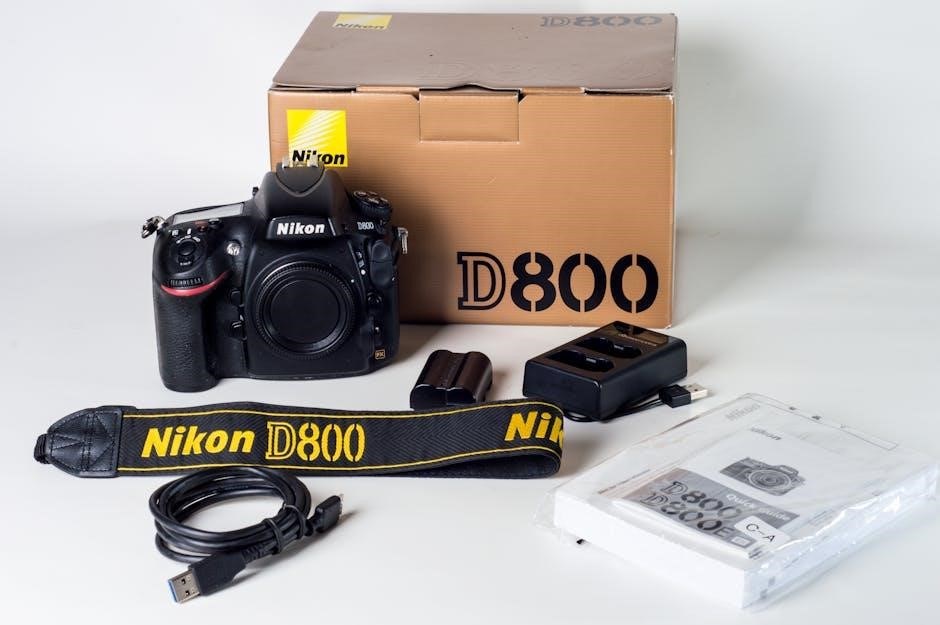
Access a comprehensive PDF version of the Nikon COOLPIX P900 user manual for detailed guidance. This official document provides in-depth explanations of all camera functions, settings, and features. Download it for offline access and convenient reference during your photography adventures.
Explore detailed instructions, troubleshooting tips, and technical specifications. The PDF manual serves as a valuable resource for mastering your P900 and unlocking its full potential. Ensure you have the latest version for accurate information.